
Roof Ventilation Basics For A Cooler Healthier Home
Understanding roof ventilation basics can help your home feel cooler during hot months. When warm air leaves the attic and fresh air enters, rooms below can stay more comfortable. Good airflow also protects your roof from heat stress and trapped moisture.
At GTM Roofing Services LLC, we explain these details in simple terms so homeowners can make safer choices. With the right attic ventilation, your roof can work with your home, not against it.
Good Roof Airflow Matters Inside Your Home
Good roof airflow helps remove hot air before it builds up under the roof. Without that path, upstairs rooms may feel too warm, even when your cooling system runs often. As a result, comfort can drop and energy use can rise.
Balanced airflow also supports moisture control roofing by helping damp air leave the attic. This lowers the chance of mold, wood damage, and weak insulation. For related roof care, you can review our roofing service options.
How Attic Ventilation Keeps Temperatures More Balanced Daily
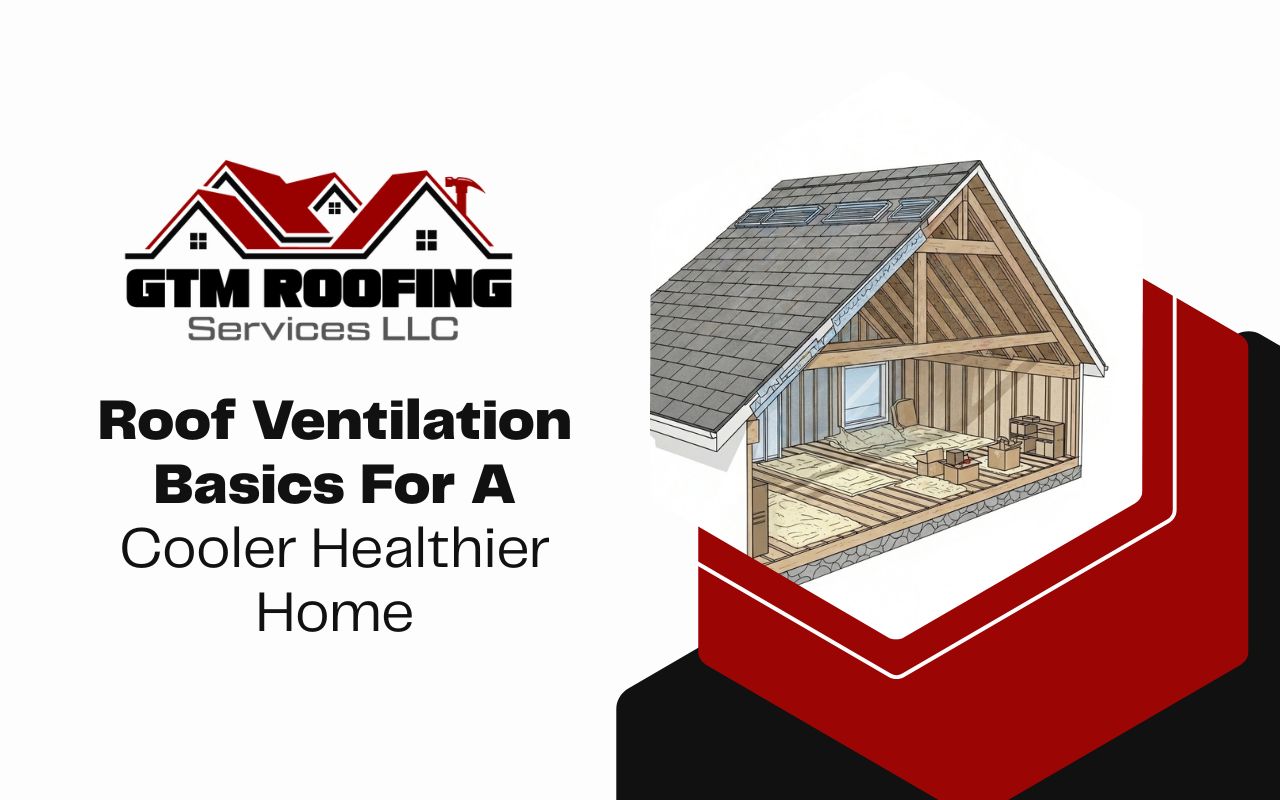
Attic ventilation works best when cool air enters low and warm air exits high. Intake vents near the soffits bring in outside air. Then ridge or gable vents let hot air move out naturally.
These roof ventilation basics keep attic heat from staying trapped for hours. They also help protect shingles, decking, and insulation. When airflow is steady, your home can feel more stable through changing weather.
Warning Signs Your Roof Needs Better Ventilation Soon
Poor ventilation often shows small signs before it causes large repairs. Therefore, checking your attic and ceiling areas can help you act early. Our team at GTM Roofing Services LLC can also inspect these issues when roof damage is present.
Very hot attic air during warm afternoons
Damp insulation or dark marks on roof boards
Peeling paint, musty smells, or ceiling stains
Soft wood, mold spots, or sagging drywall
Simple Vent Types That Support Steady Air Movement
Different vents can support roof airflow in different ways. Passive systems use natural air movement, while powered systems use fans. However, every setup needs the right balance between air coming in and air going out.
Soffit vents bring fresh air into the attic.
Ridge vents release warm air along the roof peak.
Gable vents help air leave through side walls.
Solar attic fans can boost airflow on hot days.
Comfort Benefits Homeowners Notice With Proper Ventilation Quickly
Proper ventilation can make living spaces feel cooler and fresher. It reduces heat buildup above the ceiling, so your cooling system does not need to work as hard. Over time, this can support a more comfortable home.
Moisture control roofing is another major benefit. Dry attic conditions help insulation perform better and reduce mold risks. These roof ventilation basics also help extend roof life by limiting heat and moisture stress.
Energy Savings Start With Balanced Attic Conditions Year Round
When attic heat rises too high, warmth can move into the rooms below. Then your air conditioner may run longer than needed. Balanced attic ventilation helps lower this strain by moving hot air out more often.
During colder months, steady ventilation can also reduce ice dam risks in some homes. It keeps roof temperatures more even, which helps protect against leaks. For local repair needs, visit our San Francisco roof repair page or our San Jose roof repair page.
Frequently Asked Questions
What are the main roof ventilation basics?
Roof ventilation basics include intake vents, exhaust vents, and clear air paths. Together, they help hot and damp air leave the attic while fresh air enters.
Why does attic ventilation matter for my home?
Attic ventilation helps control heat and moisture. As a result, it can protect insulation, lower roof stress, and support better comfort inside your home.
Can poor airflow damage my roof over time?
Yes, poor roof airflow can trap heat and moisture. Over time, this may lead to weak decking, mold growth, damaged shingles, and higher repair needs.
How does ventilation help with moisture control roofing?
Moisture control roofing depends on moving damp air out before it settles. Good ventilation helps keep attic materials drier and lowers the risk of rot.
When should I call a roofing professional?
You should call when you notice stains, musty smells, hot attic air, or damaged vents. At GTM Roofing Services LLC, we can review the safest next step.
Call after storm damage or roof leaks.
Ask for help when vents look blocked.
Request an inspection before major roof repairs.
Professional Support For Long Lasting Roof Ventilation Results
Some homes need more than simple cleaning or small vent changes. A roofing professional can check airflow, roof shape, vent placement, and moisture signs. This helps create a safer and more complete plan.
With GTM Roofing Services LLC, you get clear guidance before the work begins. Our team can help improve roof ventilation basics and protect your home through better airflow. To discuss your roof, use our contact page for roof guidance.